
Skip to content
Island with a marble-look composite worktop and a black hob, in the R&O Keukens showroom.

Choosing a worktop

Composite, Dekton, ceramic or granite: what each material does well, and what to watch out for.

01Materials

What each worktop can take.

Every day a worktop has to cope with heat, moisture, grease and oil. There is a choice of thickness, colour and budget: in the showroom we explain the pros and cons, and together we choose what suits the way you cook.

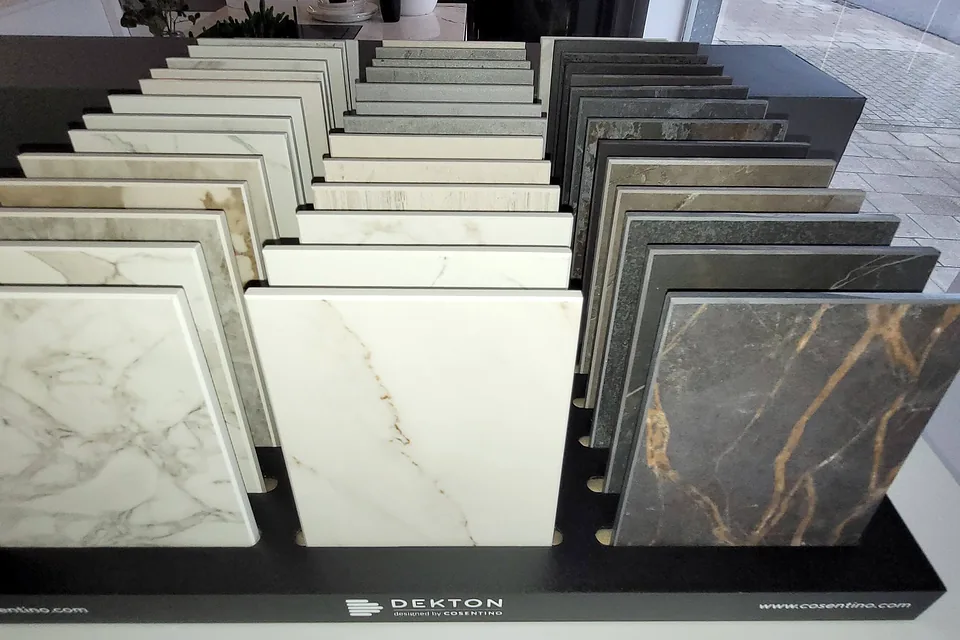
Dekton samples on a display rack, from white with grey veining to black with gold veining.
Dekton samples
Worktops compared: heat, scratches, maintenance, impermeability and price, as we describe each material
MaterialHeatScratchesMaintenanceImpermeabilityPrice
CompositeHeat-resistant, but a hot pan can leave marksHighly resistant to scratches and wearEasy to maintain and hygienicSo dense that bacteria can’t get inNot stated
DektonHeat-resistantHighly scratch- and wear-resistantStain-resistantNon-porousOne of the most expensive materials
CeramicHeat-resistantA sharp or heavy object can crack or chip itEasy to maintain, but sensitive to corrosive substancesNot statedFairly expensive
GraniteHeat-resistant, but a sudden temperature change can crack the stoneNot statedNeeds little maintenanceNot statedNot stated
  • Good
  • Watch out
  • Not stated: ask us in the showroom

Composite

Quartz composite is crushed natural stone, bound with a synthetic resin such as epoxy or polyester. A composite worktop is very strong.

  • Highly resistant to scratches and wear
  • Easy to maintain and hygienic
  • So dense that bacteria can’t get in
  • Heat-resistant, but a hot pan can leave marks

Dekton

A mix of glass, quartz and porcelain, pressed together with a specially developed technique. The result is a very hard, ultra-compact material.

  • Heat-resistant
  • Highly scratch- and wear-resistant
  • Stain-resistant
  • Non-porous
  • One of the most expensive materials

Ceramic

A blend of porcelain, clay, pigments and ceramic binders, fired hard and pressed. Ceramic looks like natural stone and is fully colourfast.

  • Heat-resistant
  • A sharp or heavy object can crack or chip it
  • Easy to maintain, but sensitive to corrosive substances
  • Fairly expensive

Granite

A natural stone, very strong and durable. Timeless, in a modern or a country kitchen.

  • Needs little maintenance
  • Heat-resistant, but a sudden temperature change can crack the stone

Natural stone

A worktop in real stone, from the quarry.

Ask in the showroom which stone suits your kitchen.

Neolith

Sintered stone: natural minerals, pressed and fired.

Ask about it in the showroom.

How well does each worktop stand up to heat?

Dekton and ceramic are heat-resistant. So is granite, but a sudden change in temperature can crack the stone; the risk is small. Composite is heat-resistant, but a hot pan can leave marks or discolouration.

What is the difference between composite and Dekton?

Composite is crushed natural stone, bound with synthetic resin. Dekton is a mix of glass, quartz and porcelain, pressed into an ultra-compact material. Both are strong and scratch-resistant. A hot pan can leave marks on composite; Dekton is heat-resistant, but one of the most expensive materials.

How much maintenance does each worktop need?

Granite needs little maintenance, composite is easy to look after and hygienic, and Dekton is stain-resistant and non-porous. Ceramic is easy to maintain, but sensitive to corrosive substances.

Can I see the worktops in real life?

Yes. In the showroom in Sint-Gillis-Dendermonde you can see and feel the samples, and we explain the pros and cons of each material.

Visit the showroom.

You’re welcome during opening hours. Prefer a set time? Ask for an appointment.

Sint-Gillislaan 193, Sint-Gillis-Dendermonde. Tuesday to Friday, 10 am to 6 pm.